
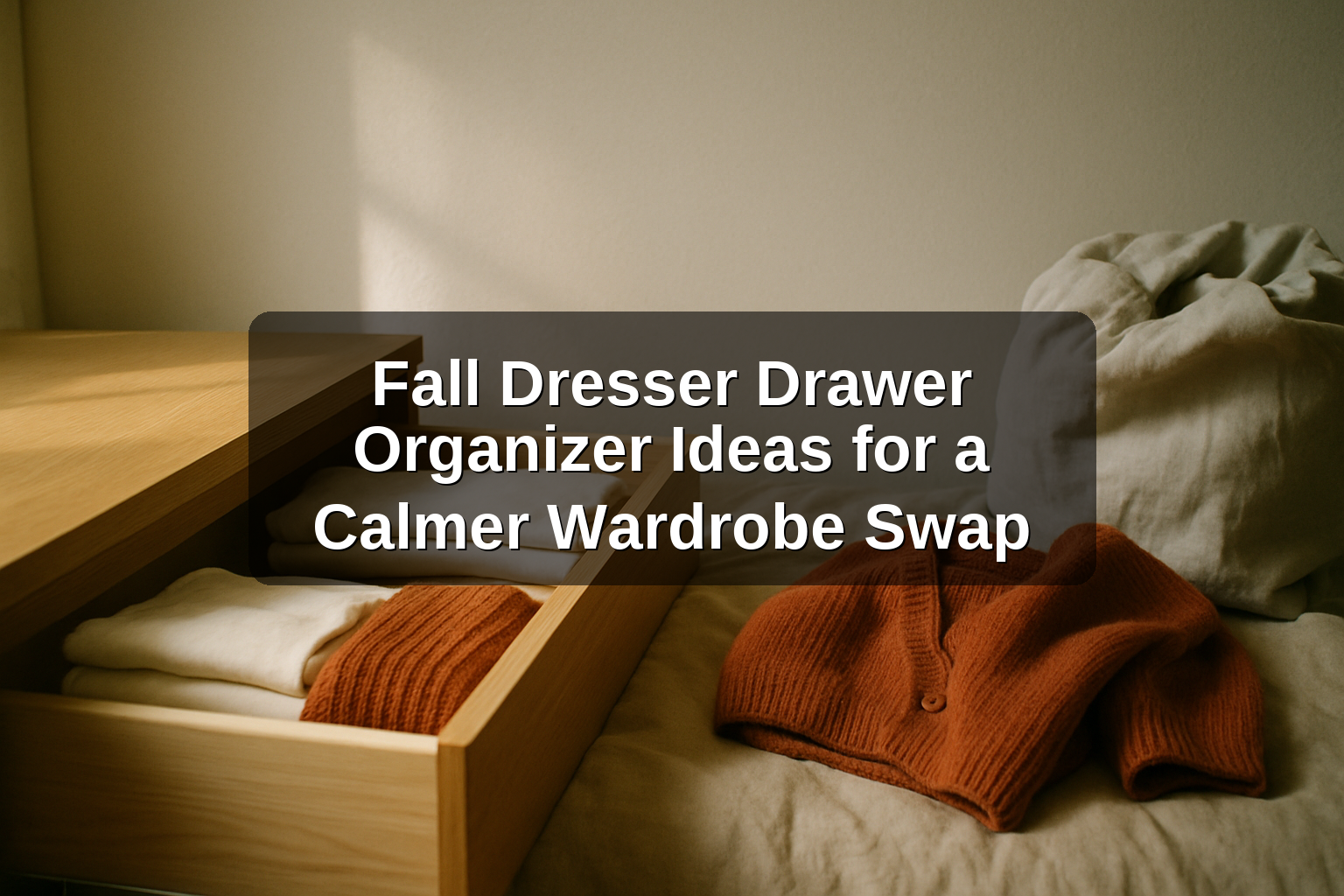
A dresser drawer organizer can make your fall wardrobe swap feel less like a chore and more like a fresh start. When sweaters, socks, and transitional layers compete for the same space, the answer is not necessarily another dresser. A few carefully chosen compartments, a sensible folding routine, and a separate home for off-season clothes can make your existing drawers work harder.
This September reset focuses on the space you use every morning. You will find practical ways to sort what stays, protect what goes into storage, and choose organizers that actually fit your drawers. The product suggestions are options, not prerequisites: start with a tape measure and what you already own.
Quick plan: Empty one drawer, group by use, measure the interior, then give each category a visible home. Keep the items you reach for most at the front; move summer-only pieces out of the way.
Why a dresser drawer organizer matters during the fall swap
Autumn wardrobes often have awkward in-between weeks. A lightweight top may still be useful, while thicker socks and knit layers are suddenly back in rotation. Without boundaries, small pieces slide underneath larger ones and you end up refolding the same drawer over and over. Dividing by category reduces that daily rummaging, but only if the dividers match the dimensions and contents of your actual dresser.
Begin with a quick inventory. Put everything from one drawer on the bed and make three piles: wear now, store until warmer weather, and repair or donate. If an item has not earned a place in your current routine, an organizer will not solve that decision for you. Wipe the empty drawer, let it dry completely, and check for snagging edges before your clothes go back in.
1. Give socks and small accessories their own compartments
Small items are where a drawer reset pays off fastest. Separate everyday socks from tights, workout socks, and accessories. Keep categories narrow enough that you can put laundry away without making decisions each time. Fold or roll items to the same approximate height and leave a little spare space for clean laundry arriving later in the week.
Vtopmart 25-Piece Clear Drawer Organizer Trays
$17.99 | 4.7 stars (about 40,672 reviews)
These mixed-size clear trays offer a flexible way to corral socks, hair accessories, belts, or jewelry without committing the entire drawer to one layout. Their appeal is that you can rearrange individual pieces as your fall routine changes. Check your interior drawer height first: rigid trays can waste space in a very shallow drawer, and they are better for small items than bulky sweaters.
If you already have spare small boxes, test a layout with them before buying trays. Close the drawer gently to make sure nothing catches. Then take a photo of the arrangement so the system is easy to restore after laundry day.
2. Keep folded knitwear visible, not stacked into a tower
Fall knits can turn a neat pile into a landslide. Instead of stacking every sweater on top of the next, fold each one into a compact rectangle and stand it vertically if the drawer is deep enough. You should be able to see the edge of each garment when you open the drawer. For heavy knits that slump, shorter stacks of two or three may be gentler and easier to maintain.
Group by how you dress rather than by color if mornings are busy: lightweight layers in one area, heavier knits in another. Avoid packing the drawer tightly. A little breathing room helps you remove one item without disrupting the rest, and it is kinder to delicate fibers. If something sheds or snags, consider a separate breathable bag rather than letting it rub against hardware.
GORILLA GRIP Non-Adhesive Drawer and Shelf Liner
$19.99 | 4.5 stars (about 32,861 reviews)
A grippy liner can help trays and folded sections stay put when a drawer opens and closes. It is especially useful with slick drawer bottoms. Cut it to fit the base, keeping vents or drawer mechanisms clear. This is an optional finishing touch, not a substitute for sorting; textured liner also needs occasional lifting and cleaning, and it may not suit delicate garments placed directly against it.
3. Move warm-weather clothes out without losing track of them
If your drawer must hold the entire year, fall pieces have to fight with summer clothes you will not wear for months. Before you pack anything away, wash and dry it according to its care label. Moisture trapped in storage is a bigger problem than an imperfect fold. Label each bag with the category and season, not a vague note such as “miscellaneous.” Keep one transitional outfit accessible if your weather still swings warm.
Fab Totes Foldable Clothes Storage Bags
$16.99 | 4.4 stars (about 37,345 reviews)
These foldable bags with handles make sense for clean summer tops, light pajamas, or spare linens on a closet shelf. You can pull out one labeled bag instead of unpacking a mixed tower of clothes. They are not hard-sided bins, so do not stack heavy objects on top or assume they will protect against damp storage areas. Check your closet shelf depth before committing to a spot.
Store clothes somewhere dry and easy to reach. An accessible shelf is more useful than an elaborate system in a space you dread opening. If you share the dresser, give each person’s off-season items their own labeled bag so next spring’s switch is straightforward.
4. Reserve compression for the right fabrics
Vacuum bags can free up room when summer bedding and extra blankets compete with fall clothing, but they are not the right answer for every textile. Follow garment care labels, and avoid compressing structured clothing, leather, or items that need loft to perform. Make sure everything is completely dry before sealing; inspect the bag after filling so a trapped zipper or sharp corner does not puncture it.
20-Pack Variety Vacuum Storage Bags
$32.99 | 4.3 stars (about 40,118 reviews)
The variety pack is an option for bulky spare bedding or other suitable textiles when storage volume is your real bottleneck. Its benefit is reducing the footprint of items you do not need every day. It requires a careful seal and a place to keep the compressed bags; it is less convenient for pieces you plan to retrieve every week. Leave a little room to reopen and reseal a bag without scattering its contents.
Practical rule: If you need an item before the next season, keep it in an ordinary labeled container rather than compressing it. Convenience is part of organization.
5. Make the surrounding closet support your drawers
A drawer organizer works best when the dresser has a clear job. Fold items that suit drawers, hang clothing that creases easily, and assign bulky overflow to a nearby shelf. Otherwise a newly tidy drawer becomes the catchall again within days. Before adding storage hardware, measure the shelf thickness, clearance above your folded piles, and how far the closet door swings.
LYNK PROFESSIONAL HOME Shelf Dividers
$17.99 | 4.2 stars (about 6,264 reviews)
These shelf dividers can separate a small stack of folded layers from spare linens above the dresser. They are useful when your closet shelf is the overflow zone, but they will not fit every shelf profile. Confirm your shelf’s dimensions and material before ordering, and avoid creating very tall, unstable stacks. The goal is easy access, not squeezing one more column into every inch.
How to choose a layout that lasts beyond September
Measure width, depth, and usable height inside each drawer, not the external dresser dimensions. Note any runners or uneven corners. Lay out paper rectangles or existing boxes before purchasing a set; this tells you whether the space needs several small trays or just one broad division. Keep frequently worn basics closest to where your hand naturally lands, and store occasional accessories toward the back.
- For shallow drawers: Choose low-profile trays and avoid deep stacks.
- For deep drawers: Try vertical folding, but leave clearance so fabric does not catch when closing.
- For shared dressers: Divide by owner first, then by clothing category.
- For small closets: Move truly seasonal items to labeled, dry storage instead of forcing every season into one drawer.
Give the new layout a one-week trial. If one compartment stays empty while another overflows, resize the categories rather than blaming yourself for not maintaining a perfect system. A useful organizer fits the way you actually get dressed, not a photo of someone else’s drawers.
A simple weekend fall drawer reset
On the first pass, clear and sort just one drawer. On the second, decide which items belong elsewhere and measure before buying anything. On the third, put daily essentials back using the easiest folding method you can repeat. Then move summer extras to labeled storage and leave one small open section for the unpredictable transition weeks.
By Monday morning, you should be able to open the dresser and spot what you need without digging through a stack. That is the real payoff: less friction at the start of the day, with a system flexible enough to change again when winter arrives.
This post contains affiliate links, which means we may earn a small commission if you make a purchase through our links, at no extra cost to you. We only recommend products we have thoroughly researched and believe will genuinely help you get organized.
Keep Exploring
Looking for more organization ideas? Browse our posts on closet and bedroom storage, organization tips, and our latest Amazon finds.